Give Your Bones a Break!

Believe it or not, maintaining bone health is an extraordinarily complex physiological process that takes place throughout your entire lifespan and is highly dependent on the foods you eat.
Some of the misinformation about bone health that you can still find online states that bones stop growing after you turn 18, it is impossible to strengthen bone after age 50, osteoporosis only happens in women and that Vitamin D supplements are all you need to rebuild and repair bones after a fracture. WRONG, Wrong, wrong.
Bone Remodeling
First off, a short lesson in bone metabolism. Similar to skin and blood cells, bones are constantly in a state of change called remodeling. This cycle of change consists of a phase called activation (signal to break down or build bone), reabsorption (process of bone tissue breaking down), reversal (transition phase), formation (new cell form bone matrix) and mineralization (strengthening).
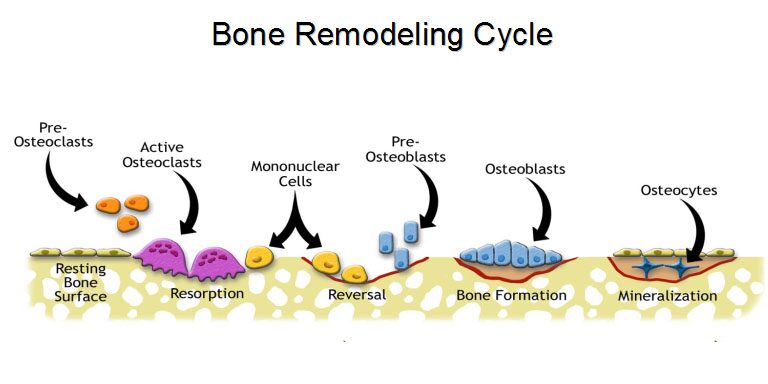
Most people think about the mineralization phase when looking for supplements and new ways to strengthen bone.
If your bones are in a constant state of reabsorption, over time they become weak and brittle. Things like estrogen loss due to normal ageing, diets high in sodium and diets low in calcium and/or vitamin D cause excessive reabsorption leading to disease states.
However, the easy answer to encourage the mineralization (strengthening) stage is not just more calcium. In order for calcium to be used to build bone matrix, protein stores and vitamin D stores must be adequate. Other key nutrients play a role in this complex process – magnesium to covert vitamin D into its active “building” form, Vitamin K is needed for protein binding, and phosphorus is used to form bone minerals.
That is quite a cocktail of nutrients, so what to eat?
What to Eat?
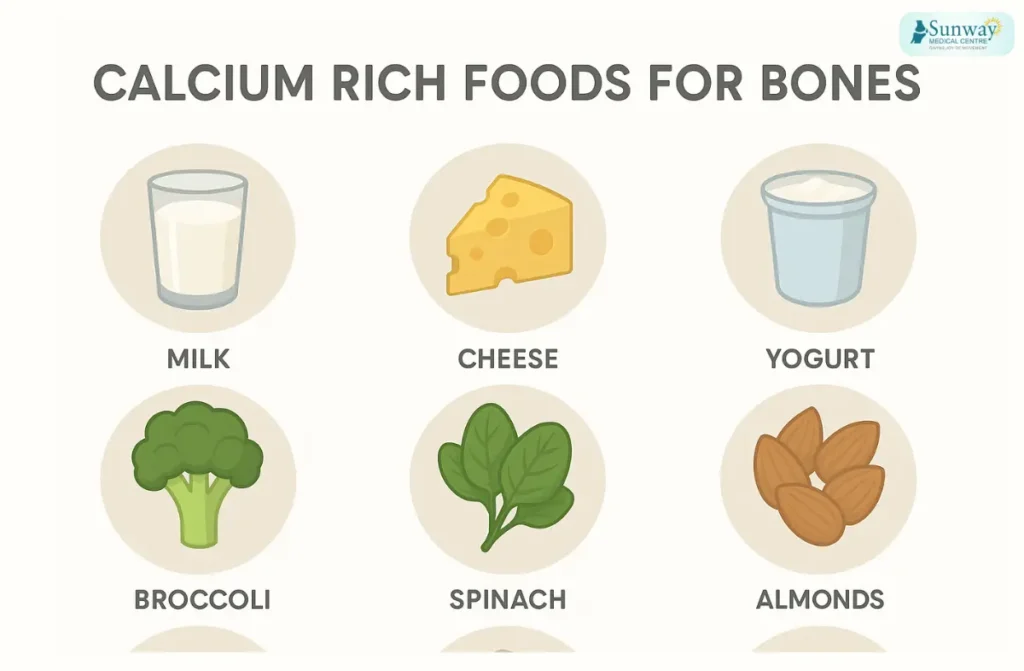
Calcium and Vitamin D are the foundation, which explains why they are one of the most popular supplements you can find and also why the explosive use of non-fortified plant-based milk is a public health concern. When possible – drink cow’s milk, preferably low fat or skim. If the only choice at your favorite coffee shop is whole milk – drink that and pass on the more expensive and potentially nutrient weak oat milk. Find ways to work yogurt, cottage cheese, spinach, egg yolk, salmon, and seafood into your diet.
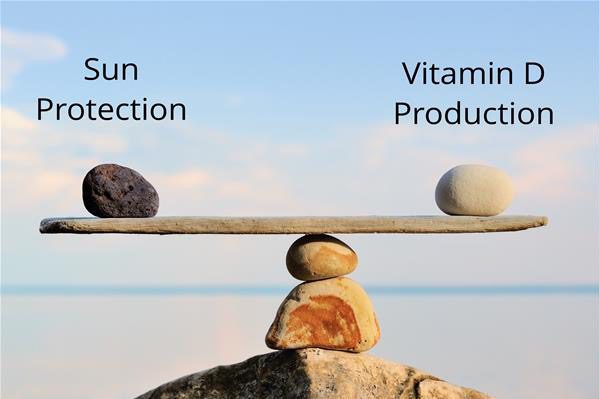
Vitamin D is a supplement added to many milk products because calcium does not work along – vitamin D must be present. The tricky part of Vitamin D is that it is a hormone and exists in many different forms. The best form of Vitamin D is natural sunlight exposure on the skin – moderated with the need to use sunscreen to prevent skin cancer.
Eat moderate amounts of protein. The story on protein needs is an entire lesson in itself, but bottom line – eat a serving of protein at every meal.
Don’t forget whole grains. Foods like quinoa, brown rice, and oatmeal provide needed magnesium. Leafy greens are a great source of Vitamin K. Most impotantly, eat as much variety of whole foods as possible.
What about Supplments?
Over the counter supplements do serve a role in helping us build and maintain strong bones. However, only take supplements under the guidance of a credentialled health professional. Taking too much of one mineral can offset the benefit of other minerals – balance is key and excessive intake of Vitamin D and Calcium can be toxic to the liver.
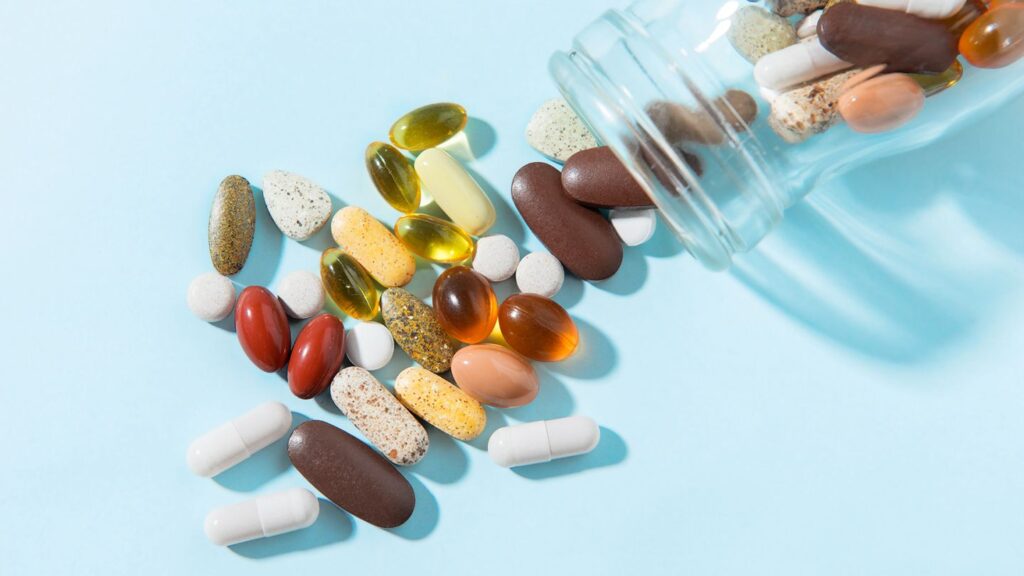
Bottom line – your bone mass changes throughout your entire life. It is important to protect your bone strength with the right amount of nutrients. It is possible to build bone mass and strengthen your bones at any age but proper, balanced nutrition is required.
If you have questions, reach out so we can create an individual, custom plan for your own bone health.
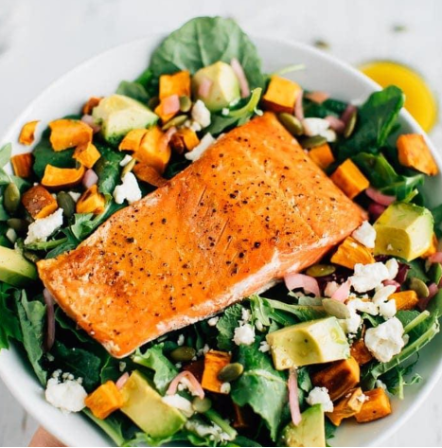
Salmon Power Bowl
- Grilled salmon (3–4 oz)
- Spinach or kale base
- Quinoa (½–1 cup)
- Cherry tomatoes, cucumber
- Olive oil + lemon dressing
Why it works:
- Salmon → vitamin D + protein